
Understanding Service Line Coverage for California Homeowners
You probably spend a good chunk of time thinking about your home’s roof, the foundation, maybe even the fancy new kitchen. But what about what’s *under* your yard? Most folks don’t give it a second thought. That’s a mistake. Those buried pipes and wires — the ones bringing water, sewer, power, and internet into your house — are surprisingly vulnerable. And fixing them? That can cost a fortune.
For California homeowners, this isn’t just a minor worry. Our state has a lot of older homes, especially in places like Pasadena, Santa Monica, or the older parts of San Jose. Those homes often have aging infrastructure underground, just waiting for a problem. Newer homes aren’t immune either. Tree roots grow. Earth shifts. Digging crews make mistakes. That’s where service line coverage comes in. It’s an add-on to your standard homeowner’s policy, often overlooked but incredibly important.
What Exactly Are Service Lines?
Think of the connections that link your house to the public utility systems. We’re talking about the main water pipe from the street to your front door, the sewer line carrying wastewater away, the electrical conduit, the natural gas pipe, and even your internet or cable TV lines. These aren’t the pipes *inside* your walls. They’re the ones buried in your yard, typically from the edge of your property line right up to your home’s foundation.
Most people assume the city or utility company owns and maintains these lines all the way to their house. Not always. For many of these critical connections, once they cross your property line, *you’re* responsible. That’s a big difference. If the water main breaks under your lawn in Ventura County, or a sewer line cracks in the Inland Empire, the repair bill lands squarely on your shoulders.

Why California Homes Need This Protection
California’s unique geography and infrastructure make service line coverage particularly relevant. We’ve got a mix of very old and very new construction. Older homes, say those built before the 1970s, often have clay sewer pipes or aging galvanized steel water lines that are prone to corrosion and collapse. Tree roots are a constant menace, especially with our mature landscaping in areas like the Valley. Those roots just love to find tiny cracks in pipes and expand, causing massive blockages and breaks.
But wait — even newer homes face risks. Shifting soil, a common occurrence in many parts of California, can put immense pressure on underground lines. Earthquakes, while usually covered for structural damage, can also indirectly damage these lines, leading to expensive repairs that might not be fully covered by a standard quake policy. Remember the Northridge quake? It wasn’t just buildings that suffered. Underground infrastructure took a hit too.
Here’s where it gets interesting. Many standard homeowner policies, even from big names like State Farm or AAA, don’t automatically include service line coverage. It’s usually an endorsement you add on. If you don’t ask for it, you probably don’t have it.
What Service Line Coverage Actually Covers
This coverage is pretty specific. It kicks in when a service line is damaged by a sudden, accidental event. We’re talking about things like:
* **Tree root invasion:** The classic culprit.
* **Corrosion or rust:** Especially common in older metal pipes.
* **Wear and tear:** When a line simply deteriorates over time.
* **Freezing:** Though less common in much of California, it happens in higher elevations or during cold snaps.
* **Ground shifting:** Movement of soil that stresses or breaks lines.
* **Digging accidents:** Someone hits a line while landscaping or doing other yard work.
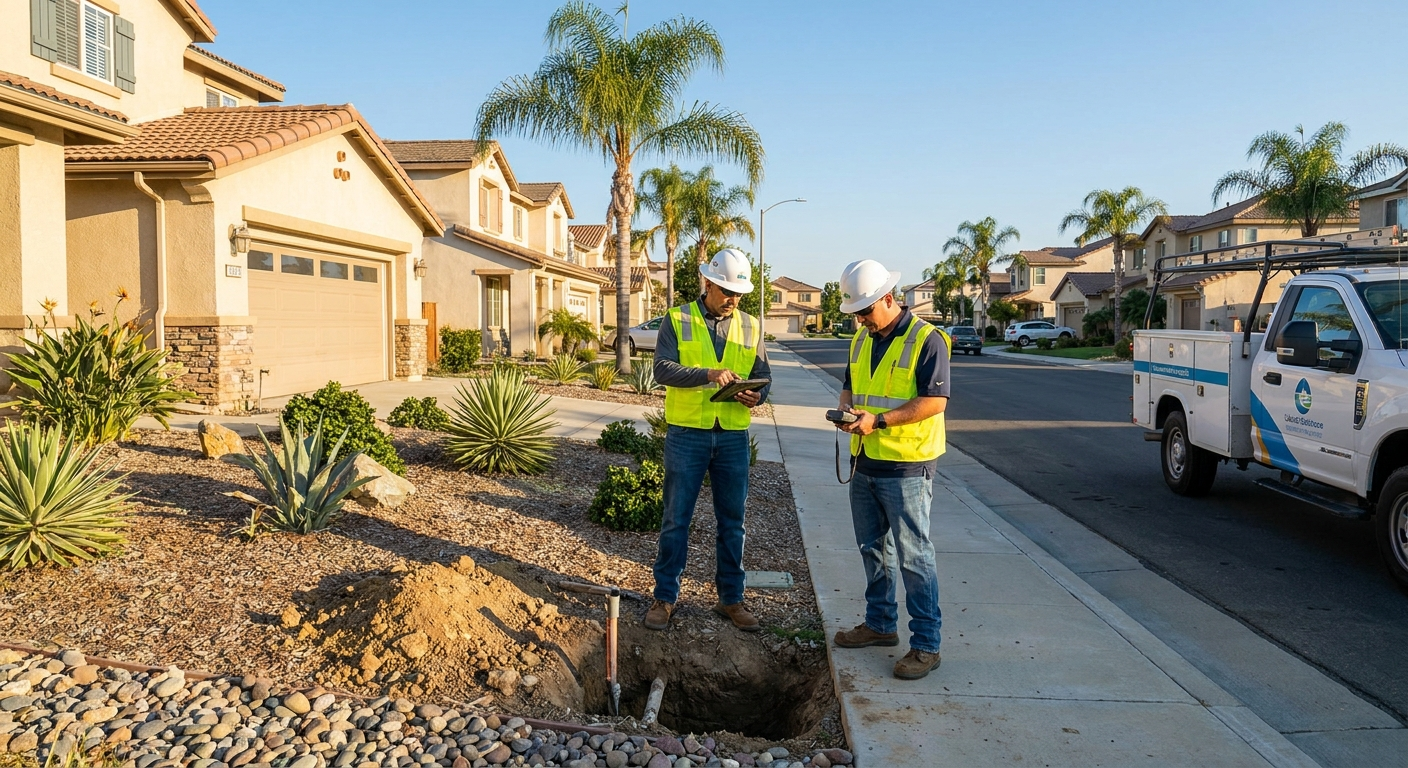
The coverage typically pays for the excavation costs — digging up your yard, driveways, or even sidewalks. It covers the repair or replacement of the damaged line itself. And often, it’ll even pay for the landscaping restoration once the work is done. Imagine the mess and cost of digging up a concrete driveway to fix a sewer line. This policy helps with all of that.
Most policies have a coverage limit, often somewhere between $10,000 and $20,000. That might sound like a lot, but digging up a sewer line, replacing a section, and then repaving can easily hit that upper end, especially with today’s labor and material costs in California.
What It Doesn’t Cover (Important Distinctions)
It’s just as important to understand what service line coverage *doesn’t* do.
First, it doesn’t cover problems with lines *inside* your house. If your toilet backs up because of an issue within your home’s internal plumbing, that’s a different kind of claim, if it’s covered at all. Second, it won’t cover lines owned by the utility company. If the city’s main water pipe breaks before it reaches your property line, that’s their problem, not yours.
Also, it typically won’t cover damage from neglect or intentional acts. If you knew your pipes were failing for years and did nothing, or if you deliberately damaged a line, you’re out of luck. And if a major peril like a fire or earthquake directly damages a line, your primary home insurance or earthquake policy might be the first line of defense, depending on the specifics. Service line coverage usually addresses the *causes* of damage that aren’t typically covered by those main policies.
The Cost of Peace of Mind
Honestly, service line coverage is usually one of the more affordable add-ons you can get for your home insurance. It’s not like adding earthquake coverage, which can be significant. Often, you’re looking at an extra $30 to $70 a year. For that small amount, you’re protecting yourself from a potential five-figure repair bill. That’s a pretty good deal for a lot of homeowners.
Which brings up something most people miss. Some homeowners consider a home warranty service instead. While home warranties can cover certain appliance and system breakdowns inside the house, they often have strict limits or exclusions for underground service lines, especially for external damage or excavation. They’re different products. A home warranty usually covers *malfunction* of systems, while service line coverage handles *damage* to the buried lines themselves.
Finding the Right Protection for Your California Home
Shopping for home insurance in California can feel like a maze these days. With insurers like Farmers and Allstate pulling back from certain areas, and changes to the FAIR Plan on the horizon, it’s more important than ever to work with someone who understands the local market.
Karl Susman, from Affordable Home Insurance California (CA License #0B75129), has been helping Californians protect their homes for years. He knows the ins and outs of policies and can help you figure out if service line coverage makes sense for your specific situation. Maybe you’re in an older part of San Diego, or you just bought a place in Sacramento with mature trees. Whatever your context, understanding these options is key.
Don’t wait until you have a geyser in your front yard or a sewage backup to think about this. A few minutes of planning now can save you a huge headache and a lot of money later.
Ready to explore your options and see how service line coverage fits into your overall home protection plan?
Get a California Home Insurance Quote Today!
Frequently Asked Questions About Service Line Coverage
Q: Is service line coverage mandatory in California?
A: No, it’s not. Unlike certain other coverages, service line protection is an optional add-on to your standard homeowner’s policy. But many experts recommend it because of the high cost of repairs.
Q: Does my regular home insurance policy cover service line breaks?
A: Most standard homeowner policies do not automatically include service line coverage. It’s usually an endorsement you need to specifically add. Without it, you’d likely be responsible for the full cost of repair and excavation.
Q: How much does it typically cost to repair a broken service line?
A: The cost can vary wildly depending on the type of line, the depth, the extent of damage, and what needs to be dug up (grass, concrete, asphalt). However, it’s not uncommon for repairs to range from $5,000 to $15,000, and sometimes even higher for complex jobs in dense urban areas like Los Angeles or San Francisco.
Q: Does service line coverage have a deductible?
A: Yes, like most insurance coverages, service line policies typically have a deductible. This is the amount you pay out-of-pocket before your insurance kicks in. Deductibles can vary, often ranging from $500 to $1,000.
Q: Can I get service line coverage from any insurance company?
A: Many major insurance carriers in California offer service line coverage as an optional endorsement. However, availability and specific terms can vary between insurers. It’s always best to discuss this with an experienced agent like Karl Susman at Affordable Home Insurance California to find the best fit for your home.
Protect your home from the ground up. Find out how affordable this essential coverage can be.
Click here for a no-obligation quote!
This article is for informational purposes only and does not constitute financial advice.