Feeling the Squeeze: Understanding California’s Home Insurance Maze
If you own a home in California, you’ve probably felt the ground shifting beneath your feet lately. Maybe your premium jumped 40% between 2022 and 2024. Perhaps your longtime insurer sent you a non-renewal notice, leaving you scrambling. Honestly, it’s a mess out there. The confusion, the frustration, the worry about protecting your biggest asset — it’s all very real. You’re not alone in feeling this way.
For many folks, especially those in places like Ventura County, the Santa Monica Mountains, or the fire-prone edges of the Inland Empire, finding decent, affordable homeowners insurance has become a daunting task. It’s not just about the big, scary wildfires, though those certainly play a part. California’s unique legal and regulatory landscape also shapes what insurers can do, what they must cover, and ultimately, what you pay.
The State’s Hand: Proposition 103 and Rate Approval
Here’s where it gets interesting. Back in 1988, California voters passed Proposition 103. This law changed everything about how insurance rates are set in our state. Essentially, it put the power to approve rate increases in the hands of the elected Insurance Commissioner. Insurers can’t just hike up prices whenever they want. They have to submit their proposed rates to the California Department of Insurance (CDI) for review and approval.
Sounds good, right? Like a protection for consumers. And for a long time, it did exactly that. But here’s the thing. Over the years, as risks like wildfires have grown more severe and costly, insurers argue that Prop 103’s process makes it hard for them to charge enough to cover their actual risks and stay profitable. They say the approval process is too slow, too strict, and doesn’t let them factor in future risks accurately. This friction between wanting to protect consumers and needing to keep insurers healthy is a big part of our current situation.

When the Market Shrinks: The FAIR Plan as a Last Resort
Because of these challenges — the growing risks and the regulatory environment — many mainstream insurers have either stopped writing new policies in California or pulled back entirely from high-risk areas. You’ve heard the headlines, haven’t you? State Farm announced a halt to new policies. AAA tightened its belt. Farmers made some big changes too. This leaves a lot of homeowners in a tough spot.
That’s where the California Fair Access to Insurance Requirements (FAIR) Plan steps in. Think of it as California’s “insurer of last resort.” If you can’t get home insurance from a traditional company, the FAIR Plan is supposed to be there for you. It’s not an insurance company in the usual sense; it’s a pool of all admitted insurers in the state, designed to make sure everyone has access to basic property coverage.
But wait — it’s not a perfect solution. While the FAIR Plan provides coverage for fire, earthquake shake damage (if added), and some other basic perils, it often comes with higher premiums than a standard policy. Its coverage can be more limited, too. You might find it doesn’t cover things like liability, theft, or water damage as comprehensively as a private policy would. And for many homeowners, especially seniors on fixed incomes, those higher costs can be a real burden. The FAIR Plan has seen a massive surge in policies, jumping by hundreds of thousands in just a few years. It’s a clear sign of how difficult the private market has become.
New Rules on the Horizon: Incentivizing Safety and “Safer from Wildfires”
The state isn’t just sitting by, watching the market shrink. The CDI, under Commissioner Ricardo Lara, has been working on a series of significant regulatory changes aimed at stabilizing the market. One of the biggest initiatives involves wildfire mitigation.
For years, many homeowners have invested their own money in making their homes and properties safer from fire — things like clearing defensible space, upgrading roofs with fire-resistant materials, or installing ember-resistant vents. But often, insurers didn’t offer any discounts for these efforts. That’s changing. New regulations are pushing insurers to offer discounts for homes that meet specific wildfire mitigation standards, often based on the “Safer from Wildfires” framework developed by CAL FIRE, the CDI, and other agencies.
This is a big deal. It means that if you harden your home — if you create that 100 feet of defensible space, if you replace old wooden decks with non-combustible materials — you should eventually see that reflected in your premium. The idea is to incentivize safety, reduce risk across the state, and give insurers more confidence to write policies in high-risk areas again. It’s a positive step, but it will take time for these changes to fully play out and for homeowners to feel the real benefit.
Local Ordinances: Your Home, Your Responsibility
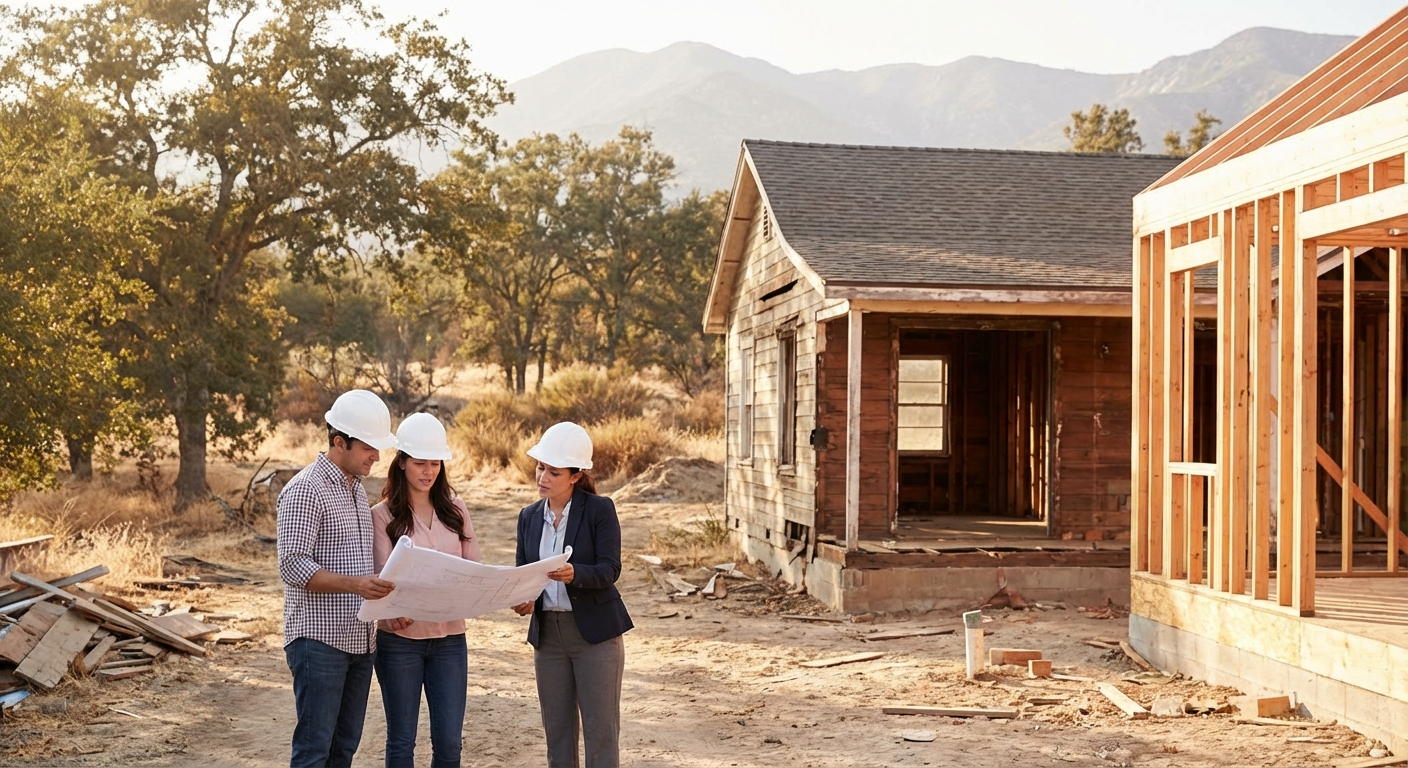
Beyond state-level regulations, many cities and counties have their own ordinances that directly impact your home’s insurability. Most notably, these involve defensible space requirements. If you live in or near a wildland-urban interface (WUI) — which includes vast swaths of California from the Sierra Nevada foothills to the hills of Orange County — you’re likely required to maintain a certain amount of defensible space around your home. This means clearing brush, trimming trees, and removing flammable materials.
These local rules aren’t just about safety; they’re increasingly tied to your insurance. Insurers are looking at these details more closely than ever. If you’re not in compliance with local defensible space laws, it could make it harder to get or keep a policy. Some insurers even conduct physical inspections to verify compliance. It’s another layer of responsibility for homeowners, but also a direct way to reduce risk.
Finding Your Way Through the Fog: What You Can Do
It’s easy to feel overwhelmed by all this. The laws, the risks, the rising costs — it’s a lot to process. But you’re not powerless. Understanding these ordinances and market dynamics gives you an advantage.
First, know your policy. Don’t just file it away. Understand what’s covered, what’s not, and what your deductibles are. Many people realize they’re underinsured only after a disaster strikes.
Second, consider those mitigation efforts. If you’re in a high-risk area, making your home more resilient to fire isn’t just about insurance; it’s about protecting your family and your property. Those new discounts are coming, and they’ll make those efforts even more worthwhile.
But here’s the most important piece of advice: don’t go it alone. The California insurance market is too complex, too volatile, for a DIY approach right now. This is where an independent insurance agent becomes absolutely essential.
An independent agent, like Karl Susman of Affordable Home Insurance California, doesn’t work for one specific insurance company. They work for you. They have access to multiple insurers — including those smaller, regional carriers you might not even know exist. They understand the nuances of the California market, the specific ordinances in different areas, and which insurers are still writing policies where. Karl, with CA License #OB75129, has spent years helping California homeowners navigate these choppy waters. He knows the ins and outs, and he can help you find options you didn’t even know were there.
You deserve clarity and choice, even when it feels like options are shrinking. Finding the right policy means asking the right questions, and an experienced agent can ask them for you. They can explain the difference between a standard policy and a FAIR Plan policy, help you understand additional coverages, and work to find the best fit for your home and your budget.
If you’re feeling lost, confused, or just plain fed up with your current home insurance situation, don’t wait until you get that non-renewal notice. Take control.
Why not start with a conversation? You can get a personalized assessment of your needs and explore your options. Get a home insurance quote in California today.
The Road Ahead for California Homeowners
The future of California home insurance isn’t entirely clear. There’s hope that the new regulations around mitigation discounts and faster rate approvals will encourage more insurers to return to the state or expand their offerings. But the underlying risks of climate change and natural disasters aren’t going away. It’s likely that homeowners will continue to face challenges, from higher premiums to stricter underwriting standards.
This means being proactive will be key. Stay informed about local ordinances. Keep up with the latest mitigation advice. And always, always work with someone who deeply understands the market. Karl Susman and his team at Affordable Home Insurance California, reachable at (877) 411-5200, are here to help you make sense of it all.
Frequently Asked Questions About California Home Insurance
What is Proposition 103 and how does it affect my insurance?
Proposition 103 is a California law that requires insurers to get approval from the state’s Insurance Commissioner before they can raise rates. It was designed to protect consumers from excessive price hikes. While it can slow down rate increases, some argue it also makes it harder for insurers to keep up with rising costs and risks, which can lead to companies pulling back from the market.
Is the California FAIR Plan the only option if I can’t get traditional insurance?
Often, it feels that way, especially in high-risk areas. The FAIR Plan is designed to be a “last resort” to ensure everyone has access to basic fire coverage. However, it usually comes with higher costs and more limited coverage than a standard policy. An independent agent can sometimes find niche insurers or other options you might not discover on your own, even if the FAIR Plan is a strong possibility.
What are “defensible space” and “home hardening” and why do they matter for insurance?
Defensible space means clearing flammable vegetation and materials around your home, typically within 100 feet, to slow or stop wildfire spread. Home hardening involves making your house itself more resistant to fire, such as using fire-resistant roofing or ember-resistant vents. These efforts reduce your home’s risk, and new California regulations are pushing insurers to offer discounts for homeowners who implement these measures.
Will my insurance premium definitely go down if I harden my home?
It’s the goal of new state regulations to make sure insurers offer discounts for proven wildfire mitigation efforts. While it’s not a guarantee your premium will drop dramatically overnight, making your home safer should eventually be recognized and rewarded by insurers, making your property more attractive and potentially lowering your costs over time.
Can an independent agent really help me find better insurance options in California?
Absolutely. In a challenging market like California’s, an independent agent is incredibly valuable. They work with many different insurance companies, not just one. This means they can shop around for you, understand specific company appetites for risk, and often find policies or coverage combinations that you wouldn’t be able to access on your own. They’re experts in navigating the state’s complex rules and finding solutions.
Don’t let the complexity of California home insurance leave you feeling exposed. There are options, and there’s help available.
Take the first step toward peace of mind. Get your California home insurance quote now.
This article is for informational purposes only and does not constitute financial advice.