Is My Stuff Really Covered If Someone Steals It? The Truth About California Homeowners Insurance and Theft
Many people assume their homeowners policy is a magic shield, covering anything and everything that goes missing. You buy a policy, pay your premium, and boom — total protection, right? Honestly, that’s a common misconception, especially here in California. The short answer is yes, your policy *does* offer theft protection. The real answer is far more complicated, filled with limits, exclusions, and some fine print you really should understand.
Think about it this way: your policy isn’t a blank check. It’s a contract with specific boundaries. For most standard homeowners policies, theft of personal property is a covered peril. That means if someone breaks into your home in, say, Ventura County, and makes off with your TV and a few gadgets, you’re likely covered. But what about that antique watch? Or your wife’s diamond engagement ring? Here’s where it gets interesting.
Myth: My Standard Policy Covers All My Valuables, No Matter What.
This is a big one. Most policies have what are called “special limits of liability” for certain types of property. That $15,000 diamond necklace? Your policy might only pay out $2,500 for jewelry theft, total. Or maybe $1,500 for firearms. Fine art, furs, precious metals, even certain electronics often have these caps. It doesn’t matter if the item is worth ten times that; the policy won’t pay above its limit for that category unless you’ve taken extra steps.
That’s not the whole story. What if your expensive bicycle gets stolen from the bike rack at the grocery store? Or your laptop vanishes from a coffee shop in the Valley? Good news: most homeowners policies *do* extend some personal property coverage away from your home. It’s called “off-premises coverage,” and it usually covers a percentage of your total personal property limit, often 10%. So, if you have $100,000 in personal property coverage, you might have $10,000 of coverage for items stolen while you’re out and about. But remember those special limits? They still apply. That $15,000 necklace stolen from your hotel room in San Diego? Still subject to the $2,500 jewelry limit.
So, what’s a homeowner to do? If you own high-value items like expensive jewelry, collectibles, or fine art, you’ll want to “schedule” them. This means you list each item individually, often providing an appraisal, and pay an additional premium for specific coverage. It might seem like an extra hassle, but it ensures those items are covered for their actual value, without those pesky category limits. Karl Susman at Affordable Home Insurance California, CA License #OB75129, often helps clients walk through these decisions, making sure those prized possessions are truly protected. You can reach him and his team at (877) 411-5200.

Myth: My Neighborhood Is Safe, So I Don’t Need to Worry About Theft.
It’s easy to think “it won’t happen to me.” We pick our neighborhoods for safety, for good schools, for a sense of community. But here’s the thing: property crime, including theft and burglary, is a reality across California. From the bustling streets of Los Angeles to quieter suburbs in the Inland Empire, no area is completely immune. Organized retail theft, car break-ins, and home invasions are all too common.
Sometimes, it’s not a smash-and-grab. Maybe a contractor’s employee pockets a watch. Or a delivery person spots an open garage door and makes a quick decision. Thieves aren’t always strangers lurking in the shadows; sometimes, they’re opportunists. Relying solely on the perceived safety of your neighborhood is a gamble. Security measures, smart habits, and appropriate insurance coverage are your best defenses.
Myth: A Security System Will Slash My Insurance Premiums.
Yes, many insurers offer discounts for security systems. An alarm system, especially one that’s professionally monitored, can certainly help lower your premium. How much? It varies widely, but don’t expect a massive reduction. We’re talking percentages, maybe 5-15%, not half your bill.
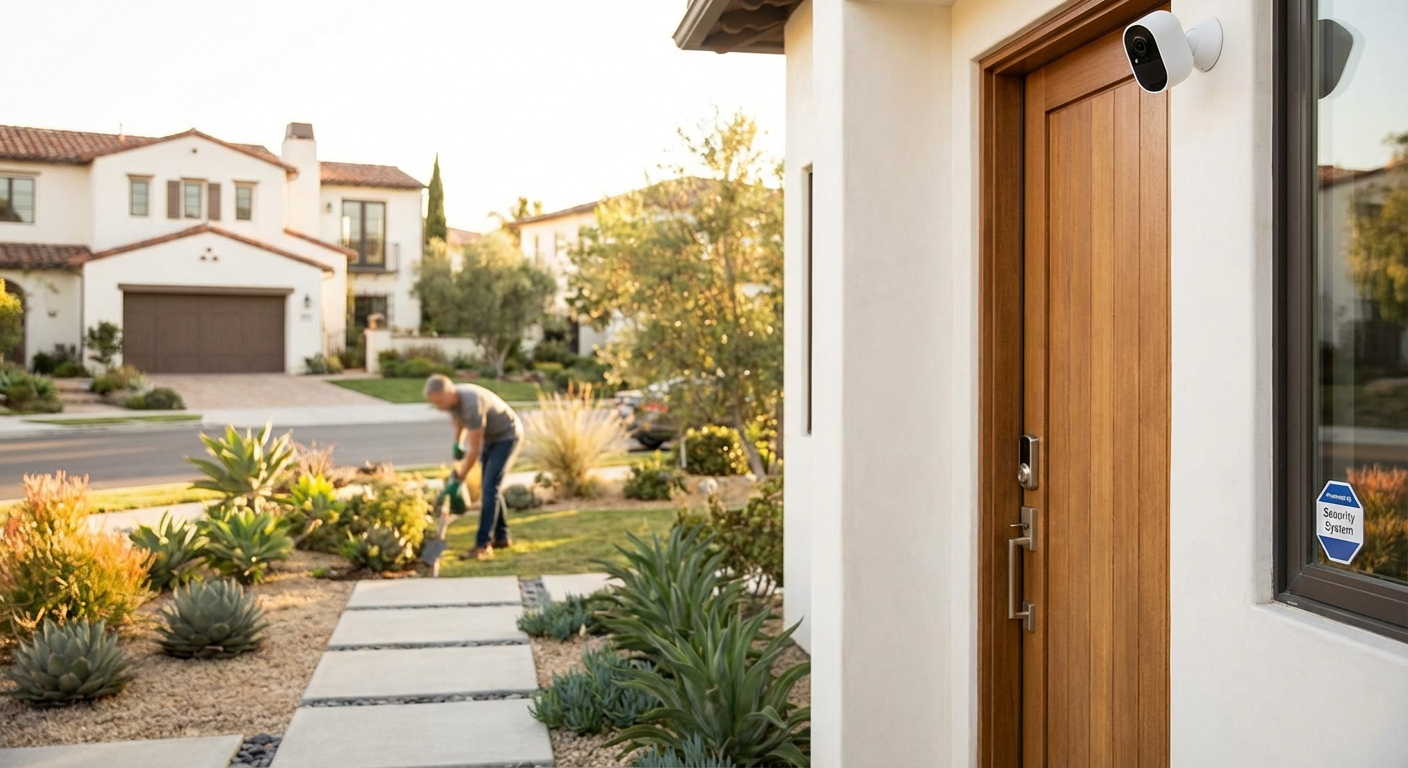
But wait — the *real* value of a security system isn’t the discount. It’s the prevention. A visible security system, especially one with cameras, acts as a deterrent. If a would-be thief sees a “protected by alarm” sign, they might just move on to an easier target. If they do break in, a monitored system can alert the authorities quickly, potentially minimizing your losses or even leading to an arrest. Smart home technology — doorbell cameras, motion-activated lights, smart locks — also plays a big role here, not just in deterring crime, but in providing evidence if something does happen.
Myth: If I’m Robbed, Filing a Claim Is Easy and Everything Gets Replaced New.
This is another area where reality often clashes with expectation. Filing a claim requires documentation. The police report is step one, of course. But then you’ll need proof of ownership for your stolen items. Receipts, photos, credit card statements, user manuals — anything that shows you owned the item and what it was worth. Imagine trying to prove you owned a specific brand of TV from three years ago without any paperwork. It’s tough. That’s why keeping an inventory of your belongings, ideally with photos or video, is so important. Store it somewhere safe, like cloud storage, not just in your house.
Which brings up something most people miss: how your stuff gets valued. Most basic policies pay out based on *Actual Cash Value (ACV)*. This means depreciation gets factored in. That 5-year-old laptop stolen from your home? You won’t get enough to buy a brand new one. The insurer will pay you what that laptop was worth *at the time of the theft*, considering its age and wear and tear. Big difference.
However, you can often choose *Replacement Cost Value (RCV)* coverage for your personal property. This means the insurer will pay you the amount it costs to replace the stolen item with a brand new one, of similar kind and quality, without subtracting for depreciation. It costs a bit more in premiums, but for most homeowners, it’s absolutely worth it. When you’re talking to Karl Susman about your policy, make sure to ask about RCV for your personal property. It can save you thousands if you ever need to make a claim.
If you’re wondering what kind of coverage makes sense for your specific situation, it’s always a good idea to get a personalized assessment. Don’t leave your protection to chance. You can start that conversation right here: Get a Home Insurance Quote.
Myth: It’s Impossible to Get Decent Theft Coverage in California Anymore.
You’ve probably heard the news: insurers are pulling back from California. State Farm, AAA, Farmers — many big names are getting pickier, raising rates, or even limiting new policies. It’s a challenging market, no doubt, especially with wildfire risks dominating the headlines. But this doesn’t mean theft protection is impossible to find. Far from it.
While the market is tougher, options still exist. This is where an independent insurance agent like Karl Susman becomes invaluable. They work with multiple carriers, not just one, and can shop around to find you a policy that offers solid theft protection, even in today’s environment. They understand the nuances of the CA market, including the limitations of the FAIR Plan (which mostly covers fire, not theft, unless you add an “HO-3” wrapper from another insurer). Don’t give up on finding good coverage just because the market feels tight. There are still solutions out there.
Protecting your home and your belongings from theft is a multi-layered effort. It involves good habits, smart security, and, yes, the right homeowners insurance policy. Understanding what your policy *actually* covers, and where its limits lie, is the first step toward true peace of mind.
Ready to explore your options and make sure your California home is properly protected against theft? It only takes a few minutes to get started. Get a Home Insurance Quote.
Frequently Asked Questions About Home Insurance & Theft in California
What’s the difference between Actual Cash Value (ACV) and Replacement Cost Value (RCV) for stolen items?
ACV pays you the depreciated value of your stolen item, meaning what it was worth right before it was taken. RCV pays you the cost to buy a brand new replacement, without subtracting for age or wear. Most people prefer RCV, even if it costs a little more.
Does my homeowners insurance cover theft if I’m away from home, like on vacation?
Yes, most standard homeowners policies include “off-premises” coverage for personal property. This usually covers a percentage (often 10%) of your total personal property limit for items stolen while you’re traveling or away from your home. However, special limits for certain items (like jewelry or firearms) still apply.
Are there specific security measures that really help lower my premium?
Professionally monitored alarm systems, deadbolt locks, and sometimes even smoke detectors can qualify for discounts. The exact discount varies by insurer, but monitored systems generally get the best rates because they provide a direct link to emergency services.
What should I do immediately after a theft at my home?
First, ensure your safety. Then, contact the police immediately to file a report. Don’t touch anything more than necessary. Once the police have finished, take photos of any damage. Then, contact your insurance agent, like Karl Susman at Affordable Home Insurance California, CA License #OB75129, to start the claims process. Be ready with your police report number and any inventory you have.
This article is for informational purposes only and does not constitute financial advice.