
California’s Fiery Reality: What Homeowners Need to Know About Insurance
The phone rings off the hook these days. Homeowners across California are worried, and for good reason. Finding decent homeowners insurance, especially if you live anywhere near a fire zone, feels like trying to find a unicorn. It’s not just a little harder; it’s a whole new ballgame.
For years, many of us just renewed our policy without a second thought. Our premiums might tick up a bit, sure, but coverage was always there. Not anymore. Big names like State Farm and Allstate have hit the brakes on new policies. Farmers and AAA are getting pickier. Suddenly, thousands of Californians are scrambling, facing non-renewals, or seeing their premiums jump 40% or more in a single year. It’s enough to make you throw your hands up.
Why This Is Happening: The Science of Risk
You don’t need to be a meteorologist to know California burns. We’ve seen devastating wildfires tear through communities from Paradise to Malibu, the Inland Empire to the hills of Ventura County. The science behind it is pretty clear: hotter, drier conditions, longer fire seasons, and more homes built closer to wildlands – what we call the Wildland-Urban Interface (WUI).
Insurance companies aren’t charities. They’re businesses that calculate risk. When the risk of paying out billions in claims goes up, they do one of two things: raise prices dramatically or stop offering coverage altogether. That’s exactly what’s happening here. They’re looking at sophisticated fire maps, satellite data, and even the specific vegetation around your house. Is your home near dry chaparral? Are you on a steep slope? Is there only one road in and out? All these factors feed into their models.

Finding Your Fire Zone: It’s More Than Just a Feeling
You might *feel* like you’re in a fire zone, but insurers use very specific criteria. Cal Fire maintains fire hazard severity zones, classifying areas as moderate, high, or very high. But wait — insurers often use their *own* proprietary maps, which can be even more granular and sometimes more restrictive than the state’s.
These maps consider things like wind patterns, historical fire activity, fuel load (how much flammable material is around), and even the steepness of the terrain. A house just a few blocks from yours could be in a different risk category, leading to wildly different rates. It’s not always fair, but it’s how they see it. This is why two neighbors might get completely different quotes.
The FAIR Plan: California’s Insurer of Last Resort
When traditional insurers won’t touch your property, California offers the FAIR Plan. Think of it as a safety net. It’s there to make sure every homeowner can get at least basic fire coverage, no matter how high the risk.
But here’s the thing. The FAIR Plan isn’t designed to be your first choice. It’s often more expensive than a standard policy, and the coverage can be pretty bare-bones. It mainly covers fire, lightning, and internal explosion. You’ll likely need to buy a separate “Difference in Conditions” (DIC) policy from another insurer to cover everything else – things like liability, theft, water damage, and other perils. This means you’re juggling two policies, two bills, and often paying more overall.
Which brings up something most people miss. Even if you’re on the FAIR Plan, you still need that DIC policy. Finding a company willing to write *just* the DIC policy can be a challenge too, though it’s generally easier than finding full coverage.
What You Can Do: Hardening Your Home and Your Wallet
So, what’s a California homeowner to do? You’ve got options, though none are magic bullets.
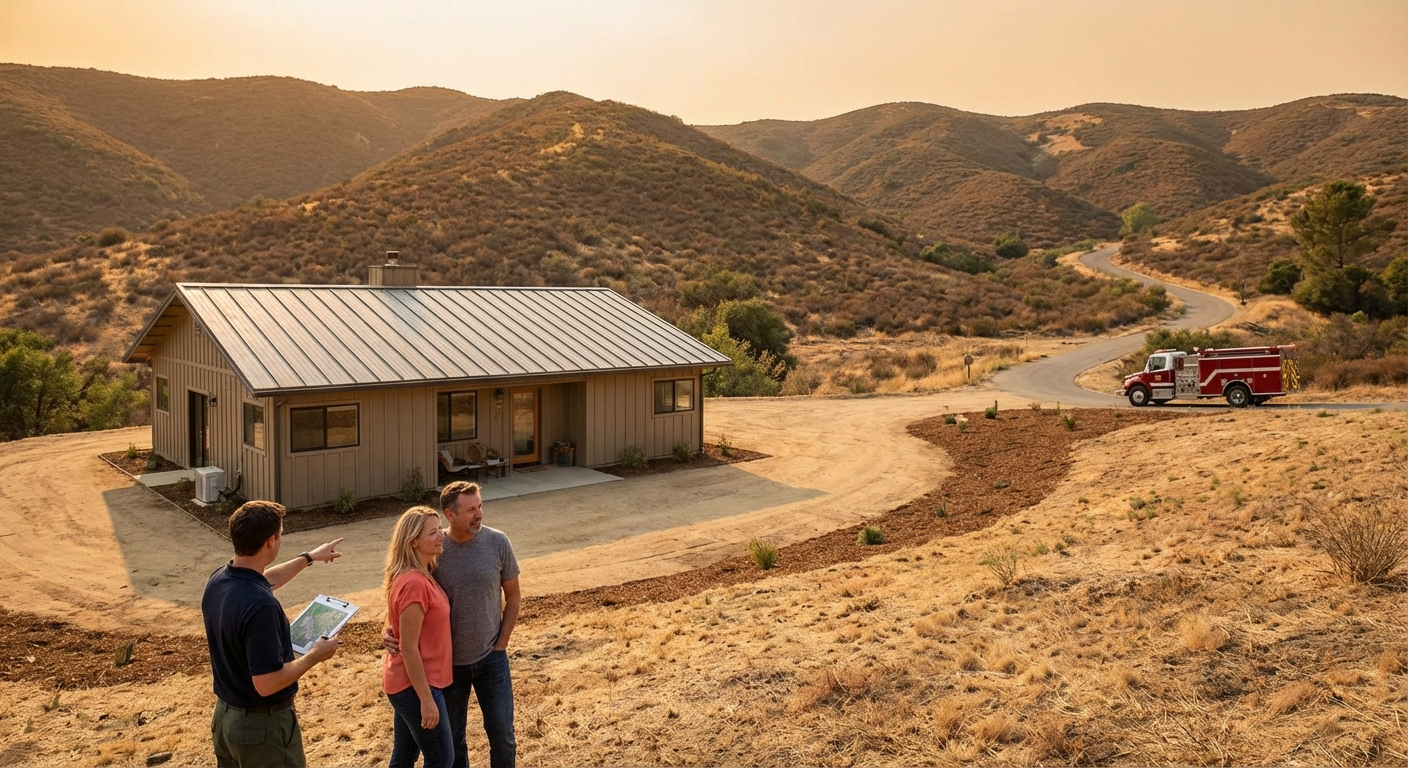
First, focus on what you can control: your home’s defensible space. This means clearing brush, trimming trees, and removing flammable materials within at least 100 feet of your house. Cal Fire has detailed guidelines for this. Many insurers are starting to offer discounts, or at least be *willing* to insure you, if you can prove you’ve done the work.
Then there’s home hardening. This means making your house more resistant to embers and flames. Think ember-resistant vents, fire-resistant roofing, dual-pane windows, and non-combustible siding. These upgrades aren’t cheap, but they can make a huge difference in whether your home survives a wildfire. Plus, some insurers are beginning to factor these improvements into their underwriting.
The Broker Advantage: Your Guide in a Confusing Market
Trying to find insurance on your own right now can feel like a full-time job. You call State Farm, they say no. You try AAA, they’re too expensive. You spend hours online, only to hit dead ends.
This is where an independent insurance agent really shines. We work with multiple insurance companies, not just one. We know which carriers are still writing policies in specific areas, which ones are offering better rates for homes with defensible space, and which ones might be a good fit even if you’re in a high-risk zone.
Honestly, it’s a mess out there, and you need someone who understands the intricacies of the California market. We can compare options, explain the differences between policies, and help you piece together coverage – maybe even a FAIR Plan with a solid DIC policy – that works for your situation.
If you’re feeling overwhelmed, don’t go it alone. You can start exploring your options right now. Click here to get a personalized quote.
Prop 103 and the Future of California Insurance
California is unique. Proposition 103, passed back in 1988, gives the state’s Insurance Commissioner the power to approve or reject rate increases. This was designed to protect consumers, but it’s also part of the reason insurers are so frustrated. They argue that the approval process is too slow and doesn’t allow them to raise rates quickly enough to cover their actual risks.
The Commissioner’s office is working on new regulations, trying to find a balance. They want to encourage insurers to come back to California and write more policies, especially in fire zones. This might mean allowing them to use forward-looking risk models (predicting future losses, not just past ones) and speeding up the rate approval process. It’s a tricky tightrope walk, and the outcome will shape the insurance market for years to come. Some hope these changes will bring stability. Others worry it’ll just mean higher rates for everyone.
Don’t Wait Until Non-Renewal
The worst time to look for new insurance is when your current policy is about to expire. Insurers are less likely to offer you a good deal if you’re desperate. Start looking at least 60-90 days before your renewal date. This gives you time to compare offers, make any necessary home improvements, and avoid a lapse in coverage.
Even if you think your current policy is fine, it never hurts to get a second opinion. The market changes fast. What was a good deal last year might not be today.
What About My Mortgage?
Your mortgage lender requires you to have homeowners insurance. That’s non-negotiable. If you can’t find coverage, or if your policy lapses, your lender will likely purchase a “force-placed” policy on your behalf. These policies are almost always more expensive and offer less coverage than anything you could find on your own. You definitely want to avoid that situation.
It’s a tough time to be a homeowner in California, especially in areas prone to wildfire. But there are still ways to protect your biggest asset. It just takes a little more effort, and often, the right guide.
Ready to explore your options and get some peace of mind? Get a home insurance quote today.
Frequently Asked Questions
How do I know if I’m in a “fire zone” according to insurers?
Insurers use their own proprietary maps, which often go beyond Cal Fire’s official maps. They analyze factors like vegetation, slope, wind patterns, and access roads. The best way to know is to get a quote; the insurer’s underwriting process will tell you how they classify your property.
What’s the difference between the FAIR Plan and a standard policy?
The FAIR Plan is California’s “insurer of last resort” and primarily covers fire, lightning, and internal explosion. It’s usually more expensive and offers less coverage. A standard policy covers a wider range of perils like theft, liability, and water damage, often at a lower cost, but it’s harder to get in high-risk areas.
Can making my home fire-resistant actually lower my premiums?
It might not always lower your premium significantly, but it can make your home *insurable* when it otherwise wouldn’t be. Some insurers are starting to offer small discounts for proven defensible space and home hardening efforts. More importantly, it dramatically increases your home’s chances of survival during a wildfire.
Why are so many big insurance companies leaving California or restricting new policies?
Major insurers like State Farm and Allstate have cited growing wildfire risks, higher reinsurance costs, and California’s regulatory environment (specifically Proposition 103’s rate approval process) as reasons for limiting new policies or pulling back from the market.
Who can help me find insurance in a fire zone?
An independent insurance agent, like Karl Susman of Affordable Home Insurance California (CA License #0B75129), specializes in navigating complex markets. We work with multiple carriers and can help you compare options, including the FAIR Plan and complementary policies, to find the best possible coverage for your home. Call us at (877) 411-5200.
This article is for informational purposes only and does not constitute financial advice.