
My Roof Is Leaking. My Insurance Will Cover It, Right?
Many California homeowners think a leaky roof is a slam-dunk insurance claim. You’ve got a policy, your roof is damaged, so they’ll just cut you a check, right? Honestly, it’s rarely that simple. The short answer is yes, sometimes. The real answer is far more complicated, especially with how things are in the Golden State right now.
Your home insurance policy isn’t a maintenance plan. That’s the biggest misconception. It’s there for sudden, unexpected damage. Think about it: a tree falls on your roof during a wild atmospheric river storm that rolls through Ventura County. Or maybe some strong Santa Ana winds whip off a bunch of shingles. That’s typically what insurance is designed for.
But here’s the thing. If your roof is just old, worn out, or you’ve neglected repairs for years, and it starts leaking, your insurer will likely say no. They’re looking for what’s called a “covered peril.” That means specific events listed in your policy, like fire, wind, hail, or vandalism. Not just “it’s old and tired.”
When “Sudden and Accidental” Makes All the Difference
This phrase, “sudden and accidental,” is key. Imagine a rogue branch from your neighbor’s oak tree crashes through your roof during a gale. That’s sudden. It’s accidental. That’s usually covered.
Now, picture this: your asphalt shingles have been curling and cracking for the past five years. You’ve noticed a small discoloration on your ceiling for months, but you just haven’t gotten around to calling a roofer. Then, after a light rain, water starts dripping into your kitchen. Is that sudden and accidental? Probably not in the eyes of your insurance company. They’ll argue it’s “wear and tear” or “gradual damage,” and those are almost always excluded.

What’s the Deal with ACV vs. RCV? It’s Just Money, Isn’t It?
Most people assume if their roof is damaged, their insurance will pay to replace it with a brand-new one. That’s not always true. This is where you run into the terms Actual Cash Value (ACV) and Replacement Cost Value (RCV). And understanding the difference could save you — or cost you — thousands of dollars.
Replacement Cost Value (RCV) is what you want. This means your insurer pays to replace your damaged roof with a new one of similar kind and quality, without subtracting for depreciation. So, if a new roof costs $30,000, and you have an RCV policy, you’d get $30,000 (minus your deductible, of course).
Actual Cash Value (ACV) is less ideal for you. This means the insurer will pay you the cost to replace your roof *minus* depreciation. Depreciation accounts for the age and condition of your roof. Think of it like buying a used car instead of a new one. An old roof has less “value” than a new one.
Let’s say your 15-year-old asphalt shingle roof, which has a typical lifespan of 20 years, gets damaged. If a new roof costs $30,000, an ACV policy might only pay you $7,500 – that’s the $30,000 replacement cost, depreciated by 75% because it’s three-quarters through its useful life. Big difference, right? You’d be on the hook for the other $22,500 plus your deductible.
Why Your Roof’s Age Really, Really Matters
Insurers don’t just guess at depreciation. They have charts and formulas. A 10-year-old roof is worth more than a 20-year-old roof. For a standard asphalt shingle roof, many insurers consider anything over 20 years old to be at the end of its life, or sometimes even uninsurable for RCV coverage. Tile roofs, common in places like the Inland Empire, might last 50 years or more, so their depreciation schedule is different.
This becomes especially critical in California. Many homes, particularly in older neighborhoods of the Valley or coastal areas, have roofs that are pushing two decades or more. Insurers are very particular about these older roofs because they represent a higher risk. They’re more prone to leaks, more susceptible to wind damage, and generally just less resilient. Sometimes, you can’t even get RCV coverage on an older roof; insurers will only offer ACV.
What If a Storm Rips Through My Roof? Is That a Sure Thing for a Claim?
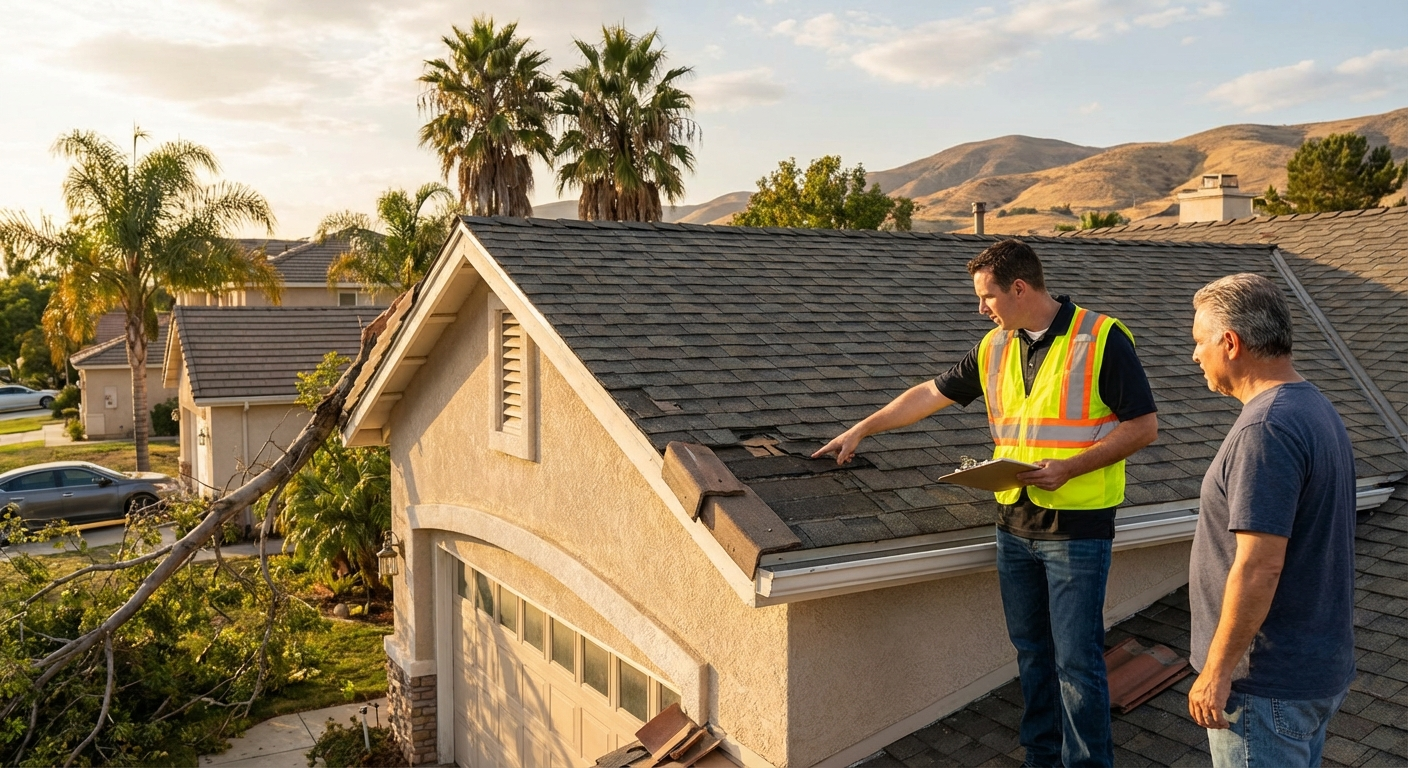
A major storm, like the ones that brought epic rain and wind to California in early 2023, can certainly cause significant roof damage. Wind can lift shingles, hail can bruise them, and falling branches can punch holes. These are generally covered perils. But even then, it’s not always a straightforward process.
Your insurer will send an adjuster to inspect the damage. They’re looking for evidence that the damage was *caused* by the storm, not just pre-existing wear and tear that the storm highlighted. If your roof was already in rough shape, they might argue that the storm was just the final straw, not the sole cause. This is where good documentation on your part becomes incredibly important. Pictures of your roof *before* the storm, if you have them, can be invaluable.
Which brings up something most people miss. Don’t wait to report damage. If you notice a leak or missing shingles after a storm, call your insurer right away. Delaying can complicate things, making it harder to prove the damage was “sudden and accidental” and not something that developed over time.
The Dreaded “Wear and Tear” Exclusion
This is the number one reason roof damage claims get denied. Insurance companies are very clear: they don’t cover general deterioration from age or lack of maintenance. Your policy expects you to keep your home in good repair.
Think about it this way: if your car’s tires wear out, you don’t file an auto insurance claim, do you? You replace them as part of normal maintenance. Your roof is similar. If it’s just old and starts leaking, that’s on you. If a sudden hailstorm pummels it, that’s on your insurer. Big difference.
My Insurer Dropped Me! What Now?
This isn’t a myth; it’s a harsh reality for many California homeowners right now. Major insurers like State Farm, Farmers, and AAA have either stopped writing new policies or significantly restricted coverage in certain areas. Why? A mix of factors: devastating wildfires (like the potential 2025 LA fires), soaring reinsurance costs (what insurers pay to insure *themselves*), and Proposition 103, which limits how much they can raise rates.
If your insurer non-renews your policy, don’t panic. You’re not without options, but they might not be ideal. Your first step should be to contact an experienced independent agent, like Karl Susman at Affordable Home Insurance California (CA License #OB75129). An agent can shop around with the remaining carriers who are still writing policies in your area.
If traditional options dry up, you’ll likely turn to the California FAIR Plan. This isn’t a private insurance company; it’s California’s “insurer of last resort.” It guarantees basic fire coverage for homeowners who can’t get it anywhere else.
But wait — there are limitations. FAIR Plan coverage is often more expensive, and it’s much more basic. For roofs, they typically only offer Actual Cash Value (ACV) coverage, not Replacement Cost Value (RCV). So, if your roof gets damaged, you’re looking at that depreciated payout we talked about earlier. And they’re very strict about roof age and condition. They might even require you to repair or replace your roof before they’ll issue a policy.
For a free, no-obligation comparison quote and to explore your options, you can reach out to Karl’s team. It only takes a few minutes to see what’s available. Get your quote here: Get a Quote Today!
Is There Anything I Can Do to Make My Roof Claim Go Smoother?
Absolutely. You’re not just a passive participant in this process. Taking proactive steps can make a world of difference.
First, know your policy. Seriously. Dig it out, read the “perils covered” and “exclusions” sections, especially those related to roofs. Understand your deductible – that’s the amount you pay out of pocket before your insurance kicks in.
Second, document, document, document. Take photos of your roof when it’s in good condition. Keep receipts for any repairs or maintenance you’ve done. If a storm hits, take pictures of the damage immediately. The more evidence you have, the stronger your case.
Third, get multiple estimates from reputable, licensed contractors. Don’t just rely on the first quote. This helps ensure you’re getting a fair price and can provide leverage if your insurer’s estimate seems low.
Finally, work with an experienced independent insurance agent. An agent like Karl Susman (Affordable Home Insurance California, CA License #OB75129) knows the ins and outs of the insurance world. They can help you understand your policy, guide you through the claims process, and advocate on your behalf. They’re on your side, not the insurance company’s.
The Cost of Waiting
Procrastination is a killer when it comes to roof damage. A small leak might seem minor, but it can quickly lead to bigger, more expensive problems. Water can rot your decking, destroy insulation, cause mold growth, and damage ceilings and walls.
Here’s the kicker: if your insurer can prove that secondary damage (like mold) resulted from you delaying repairs to an initial leak, they might deny coverage for *that* secondary damage. They’ll argue you didn’t mitigate the loss. So, that tiny drip could cost you thousands in uncovered repairs down the line. Don’t let a small issue become a catastrophic one.
Frequently Asked Questions About California Roof Claims
Can I get my roof replaced if it’s just old, not damaged by a specific event?
No, generally not. Home insurance policies cover sudden, accidental damage from covered perils, not the cost of replacing a roof that has simply reached the end of its useful life due to age or wear and tear. That’s a maintenance expense you’re responsible for.
What’s a typical deductible for roof damage claims in California?
Deductibles vary widely. Many standard policies have a flat dollar amount, like $1,000 or $2,500. However, some California policies now include separate, higher deductibles for specific perils like wind or hail — sometimes 1% or 2% of your home’s dwelling coverage. So, if your home is insured for $500,000, a 1% deductible would be $5,000. Always check your policy declarations page.
Does filing a roof claim always raise my premiums?
Not always, but it’s a definite possibility. A single claim might not cause a huge spike, especially if it’s a major, unavoidable event like a wildfire. However, multiple claims, or claims for preventable damage, can certainly lead to higher premiums or even non-renewal of your policy. Insurers look at your claims history as part of their risk assessment.
What if the damage is only partial? Will my insurer pay for a full roof replacement?
If only a section of your roof is damaged, your insurer will typically pay to repair or replace just that damaged section. However, if matching new shingles to old ones is impossible, and it creates an unsightly appearance – sometimes called “matching issues” – some policies might cover the cost to replace the entire slope or even the whole roof to ensure uniformity. This varies by policy and state regulations, so it’s a conversation to have with your agent and adjuster.
Ready to understand your current policy better or explore more reliable options for your California home insurance? Don’t wait until disaster strikes. Get a personalized quote and expert advice from Karl Susman’s team today. They make it easy. Visit https://affordablehomeinsurancecalifornia.com/quote/ or call (877) 411-5200.
This article is for informational purposes only and does not constitute financial advice.