
When the Ground Gives Way: Understanding Sinkhole Coverage in California Homeowners Insurance
There’s a unique kind of dread that settles in when you hear about homes simply… sinking. Maybe you’ve seen the news reports from Florida, where massive sinkholes swallow cars and even entire houses. It’s a terrifying thought, imagining your biggest asset disappearing into the earth. For California homeowners, that fear often comes with a big question: Does my insurance even cover something like that?
Honestly, it’s a fair question. You’re already dealing with the complexities of earthquake insurance, wildfire risks, and just generally trying to keep your home safe in a state that seems to throw everything at you. Adding “what if the ground opens up?” to that list can feel overwhelming. And you’re not wrong to feel a bit confused. The short answer is yes, sinkhole damage *can* be covered. The real answer is, as with most things in insurance, much more complicated.
What’s Really Happening Under Your Home?
When we talk about a “sinkhole,” most of us picture that dramatic, sudden collapse. Geologically, a true sinkhole happens when soluble bedrock, like limestone or gypsum, dissolves over time, creating underground caverns that eventually can’t support the weight above them. That’s common in places like Florida.
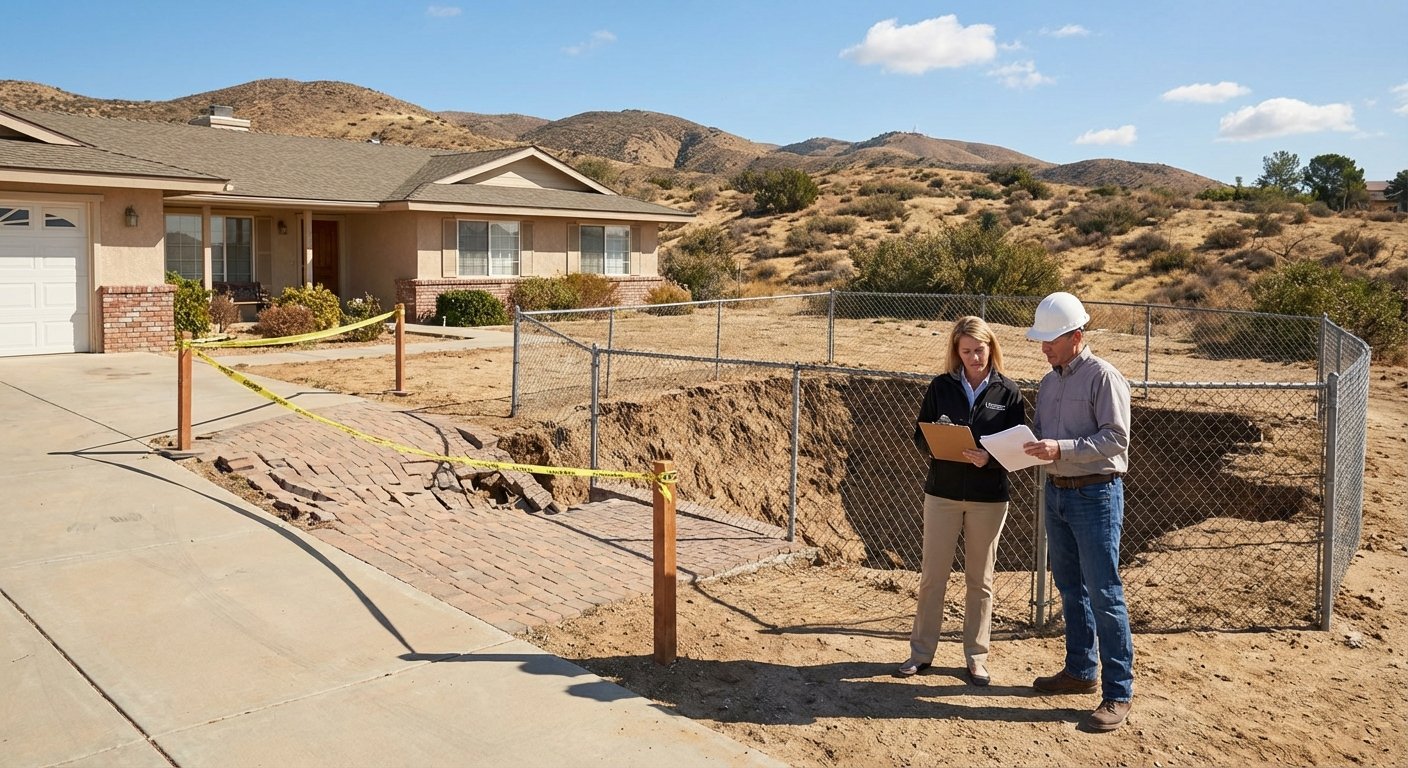
But here’s the thing about California: we don’t have vast stretches of that kind of bedrock. So, while true geological sinkholes are rare here, we absolutely have ground movement issues. We’re talking about things like expansive soils that swell and shrink with moisture, old mining tunnels collapsing, or subsurface erosion from broken water pipes. These can all cause localized ground instability that feels a lot like what people imagine a sinkhole to be – damage from the ground beneath giving way. This distinction matters a lot to insurance companies.
Your standard homeowners policy, often called an HO-3, is generally pretty good. It covers a wide range of perils, from fire and theft to windstorms and vandalism. But it usually has a big exclusion for “earth movement.” That’s a blanket term that includes earthquakes, landslides, mudslides, and yes, even most forms of ground subsidence or earth sinking. It’s a tough pill to swallow, knowing your home could be damaged by something underfoot and your policy might not help.

The “Sudden and Accidental” Exception: Where Coverage Can Appear
So, if “earth movement” is out, how could a sinkhole ever be covered? This is where the nuances of policy language become absolutely critical. Most policies *will* cover damage that results from a *sudden and accidental direct physical loss* to your property.
Think about it this way: if an underground water pipe bursts, and that rushing water gradually erodes the soil beneath your foundation, causing a sudden collapse of a section of your home, that *could* be covered. Why? Because the *cause* of the ground movement wasn’t a natural geological event like an earthquake. It was a sudden, accidental plumbing failure. The ground movement was a *consequence* of a covered peril (the burst pipe), not an excluded one.
This isn’t always a slam dunk, though. Insurers will investigate the cause very carefully. Was it truly a sudden burst, or a slow leak over years that finally led to damage? Was the pipe itself covered? These questions become battlegrounds when a claim arises. It’s a frustrating situation for homeowners, trying to piece together what’s covered and what isn’t when their home is literally cracking apart.
Earthquake Insurance vs. Sinkhole Coverage: A Big Difference
Many California homeowners rightly worry about earthquakes. Most of us know that standard home insurance doesn’t cover earthquake damage, and you need a separate policy or endorsement, usually from the California Earthquake Authority (CEA), for that.
But wait — earthquake coverage isn’t sinkhole coverage. An earthquake policy specifically covers damage caused by seismic activity. Ground movement from a burst pipe, or from expansive soil, or from the collapse of an old tunnel? That’s not an earthquake. So, don’t assume that because you have earthquake insurance, you’re protected from all forms of ground instability. You’re not. They’re two completely different beasts in the insurance world.
Finding the Right Protection: Endorsements and Specialized Policies
Given the “earth movement” exclusion, what are your options?
For many, the best path is often through specific endorsements that can be added to your existing homeowners policy. Some insurers offer endorsements that specifically add coverage for “ground collapse” or “subsidence” under certain conditions. These aren’t common, and they’re definitely not cheap, but they exist. These endorsements usually specify the *cause* of the ground collapse they’ll cover – often linked to subsurface water erosion, like from a burst pipe, or even the collapse of underground man-made structures (like old septic tanks or utility lines) that aren’t part of the home’s foundation itself.
Another less common option involves specialized policies. These are rare and usually for properties with a known, specific risk. You might find them through surplus lines carriers – companies that insure risks standard carriers won’t touch. These policies are definitely not for everyone, and they come with higher price tags and often very specific terms.
The availability of these options really depends on your specific insurer, your property’s location, and its geological characteristics. If your home sits near an old mining area in the Sierra foothills, or in a part of Ventura County with known expansive soils, finding this kind of coverage might be harder or more expensive than if you’re on solid bedrock in the Inland Empire.
If you’re worried about this, and you’re looking for answers, you’re not alone. Many homeowners feel lost trying to figure out these details. That’s why talking to an experienced agent like Karl Susman at Affordable Home Insurance California is so valuable. He and his team, with CA License #OB75129, understand the unique challenges California presents and can help you sort through these complex policy details. You can reach them at (877) 411-5200.
The Cost of Peace of Mind
There’s no getting around it: adding coverage for ground movement, even in its limited forms, will increase your premium. How much? It varies wildly. It could be a few hundred dollars a year for a basic endorsement, or significantly more for specialized coverage. Insurers look at a lot of factors:
* **Your property’s specific geology:** Is it built on fill dirt? Near a known fault line (even if it’s not earthquake coverage, it suggests ground instability)? Are there historical issues in the area?
* **Your home’s age and construction:** Older homes, especially those with unreinforced foundations, might be seen as higher risk.
* **The insurer’s appetite for risk:** Some companies are simply more willing to write this kind of coverage than others.
It’s often a balancing act between your budget and your level of worry. No one wants to overpay, but no one wants to be caught without protection either. It’s a deeply personal decision, and one that deserves a thorough conversation with someone who knows the California market inside and out.
If you’re ready to explore what options might be available for your property, or if you just want to understand your current policy better, don’t hesitate. Getting answers can bring a lot of peace of mind.
You can start the conversation and get a personalized quote by visiting: https://affordablehomeinsurancecalifornia.com/quote/
The Realities of a Claim
Let’s say you do have coverage, and something happens. What then? Expect a thorough investigation. Insurers will send adjusters, engineers, and sometimes even geologists to figure out exactly what caused the damage. They’ll want to know if it was a sudden event, what the underlying cause was, and whether it falls within the specific language of your endorsement. This process can be lengthy and, frankly, stressful.
Having good documentation of your home before any damage occurs – photos, inspection reports – can be incredibly helpful. And having an agent who can advocate for you during the claims process is invaluable. Karl Susman and his team at Affordable Home Insurance California have seen it all and can guide you through these difficult moments.
It’s a tough situation to think about, but being prepared means understanding your policy *before* disaster strikes. Don’t wait until you hear a strange creak or see a crack in your foundation to wonder if you’re covered.
For a detailed look at your options and to get a quote, click here: https://affordablehomeinsurancecalifornia.com/quote/
Frequently Asked Questions About California Sinkhole Coverage
Q: Are true geological sinkholes common in California?
A: Not like in Florida, where soluble bedrock like limestone is widespread. California’s geology is different. However, we do experience other forms of ground subsidence and collapse, often related to expansive soils, old mining activities, or subsurface water erosion from broken pipes, which can cause similar damage.
Q: Does my standard CA homeowners insurance policy cover ground collapse?
A: Generally, no. Standard policies typically exclude “earth movement,” which includes most forms of ground subsidence, landslides, and earthquakes. Coverage for ground collapse usually requires a specific endorsement or a specialized policy.
Q: How can I get coverage for ground collapse or “sinkhole-like” damage?
A: Your best bet is to look for an endorsement that can be added to your standard homeowners policy. These endorsements are often for “ground collapse” or “subsidence” and usually specify the cause they’ll cover, such as damage from subsurface water erosion due to a sudden, accidental discharge of water from a plumbing system. The availability and cost vary by insurer and location.
Q: Is earthquake insurance the same as sinkhole coverage?
A: No, absolutely not. Earthquake insurance covers damage specifically caused by seismic activity. Ground movement from other causes, like a burst pipe or collapsing soil, would not be covered by an earthquake policy. They are distinct types of coverage for different perils.
Q: What should I do if I’m worried about ground movement affecting my home?
A: The first step is to talk to an experienced insurance agent who understands California’s unique geological risks and insurance market. They can review your current policy, explain exclusions, and help you explore any available endorsements or specialized options. Getting professional advice is key to ensuring you have the protection you need.
This article is for informational purposes only and does not constitute financial advice.